Designing for a changing climate: choosing plants for function rather than fashion
As we come to the end of the UK’s fifth heatwave this summer and reflect on the devastating aftermath these extreme temperatures and drought have caused to our landscapes, wildlife and resources, planting the right plant in the right place has never felt so important. Following our recent Kawauchi Rowe studio trip to Beth Chatto’s garden, where none of the plants are irrigated, we’ve been reflecting on how, as designers, we should be designing for the future.
Design Director Tomoko Kawauchi, believes that creating gardens for a changing climate starts with understanding and working with the conditions of a site, rather than simply selecting plants based on aesthetics alone.
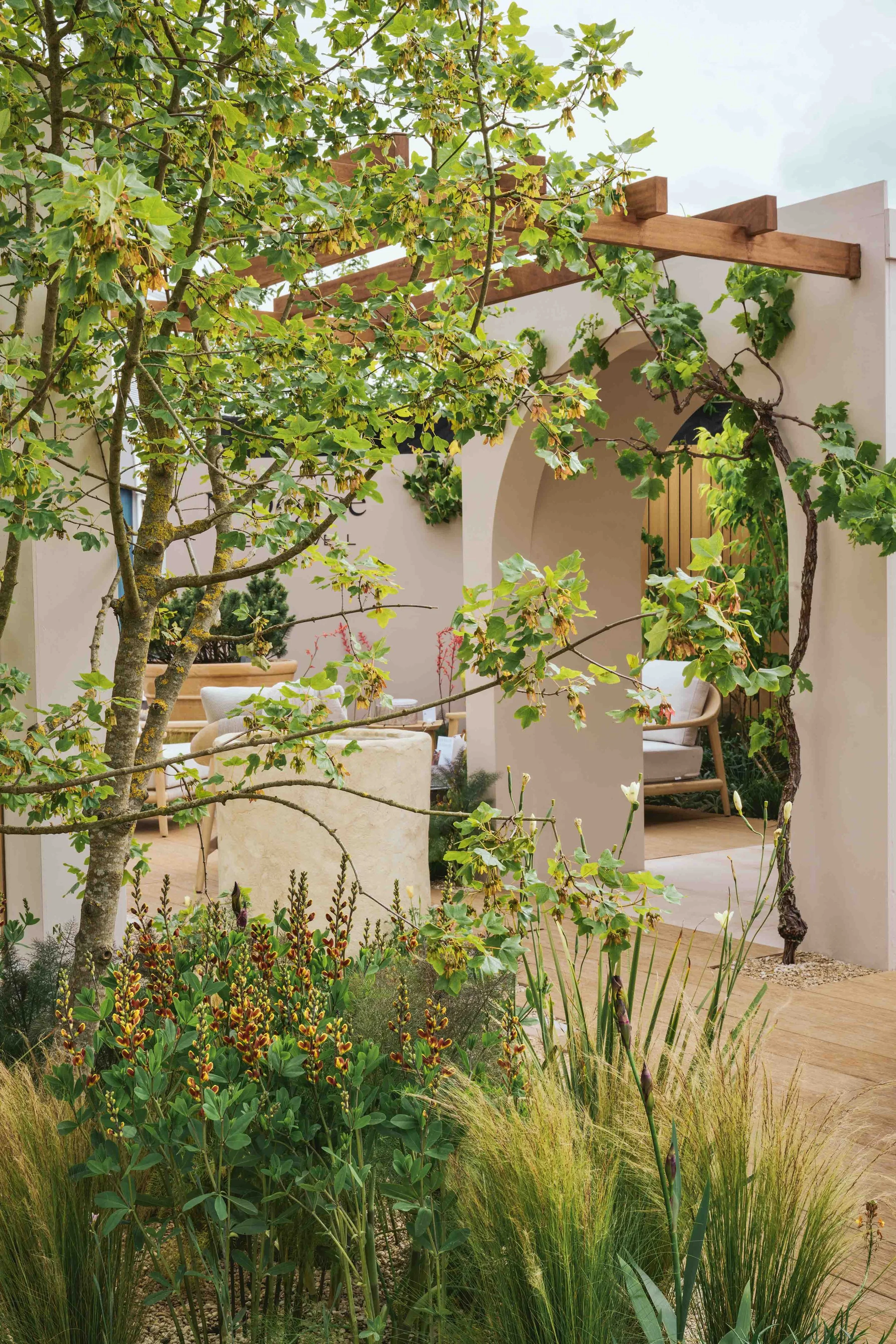
At this year's RHS Chelsea Flower show, we created an award-winning garden. Our brief was to create a Mediterranean inspired landscape, a perfect opportunity to design a gravel-specific, drought-tolerant planting scheme that reflects our wider approach to designing resilient gardens. Here are our three key principles when designing for a changing climate:
Firstly, it’s important to fully observe and understand the site; the aspect, topography and soil composition of the site before selecting plants.
Secondly, it’s important to understand the characteristics and natural habitats of the plants themselves. Chose plants for where they evolved to thrive
Finally, design plant communities, not collections. Consider how plants coexist naturally.
For our Chelsea garden, this meant selecting gravel-specific, drought-tolerant species with adaptations that help reduce transpiration, increase water storage and improve water uptake.
For example, many of our specimens used in our garden, such as Stachys ‘Silver Carpet’ and one of our favourite little alpines, Cotula hispida, share glaucous and silvery foliage, which helps reflect the intensity of sunlight and reduce heat absorption. They also have hairy, fuzzy leaves that reduce water loss by trapping humid air on the leaf surface and protects the plant from intense winds.
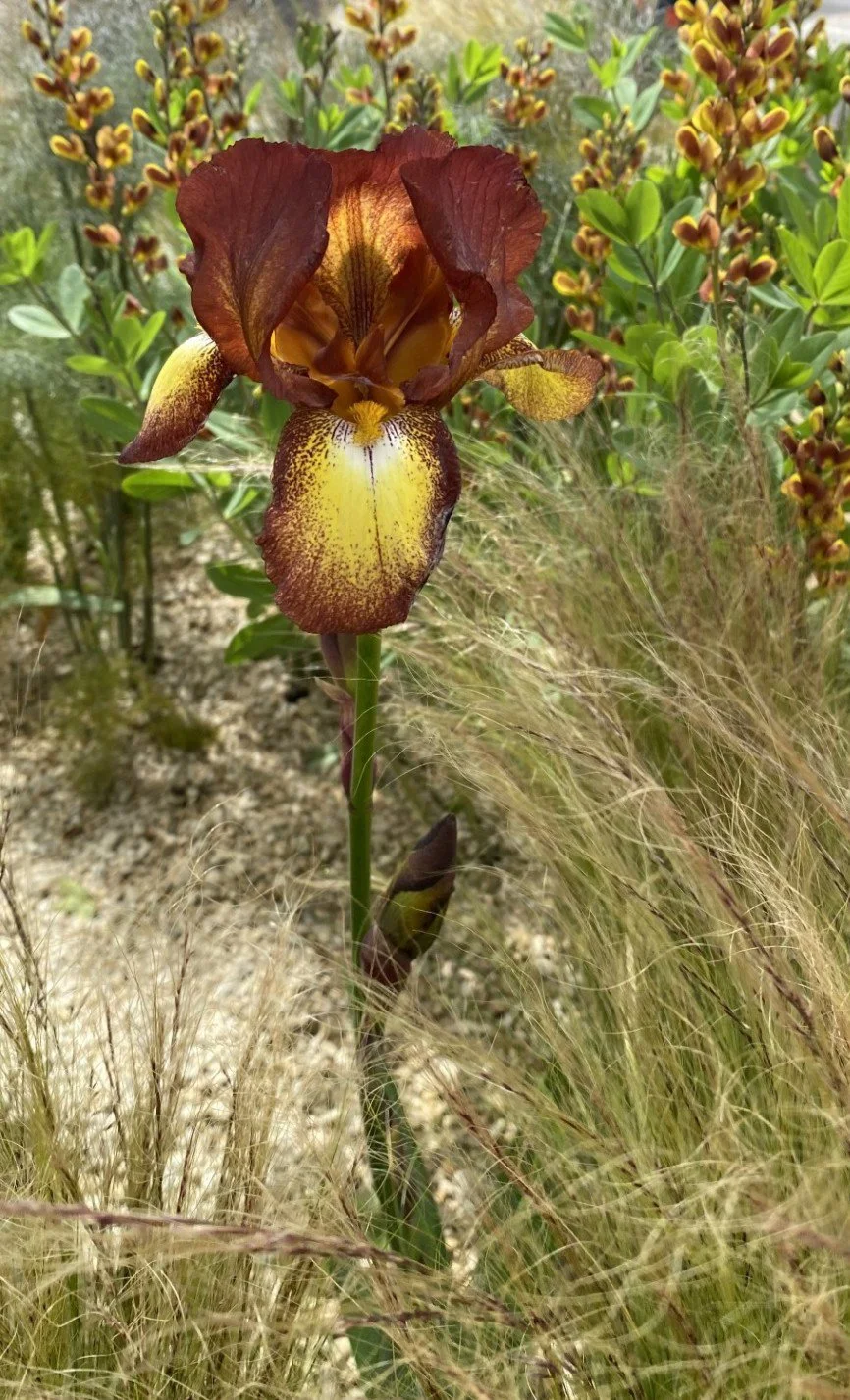
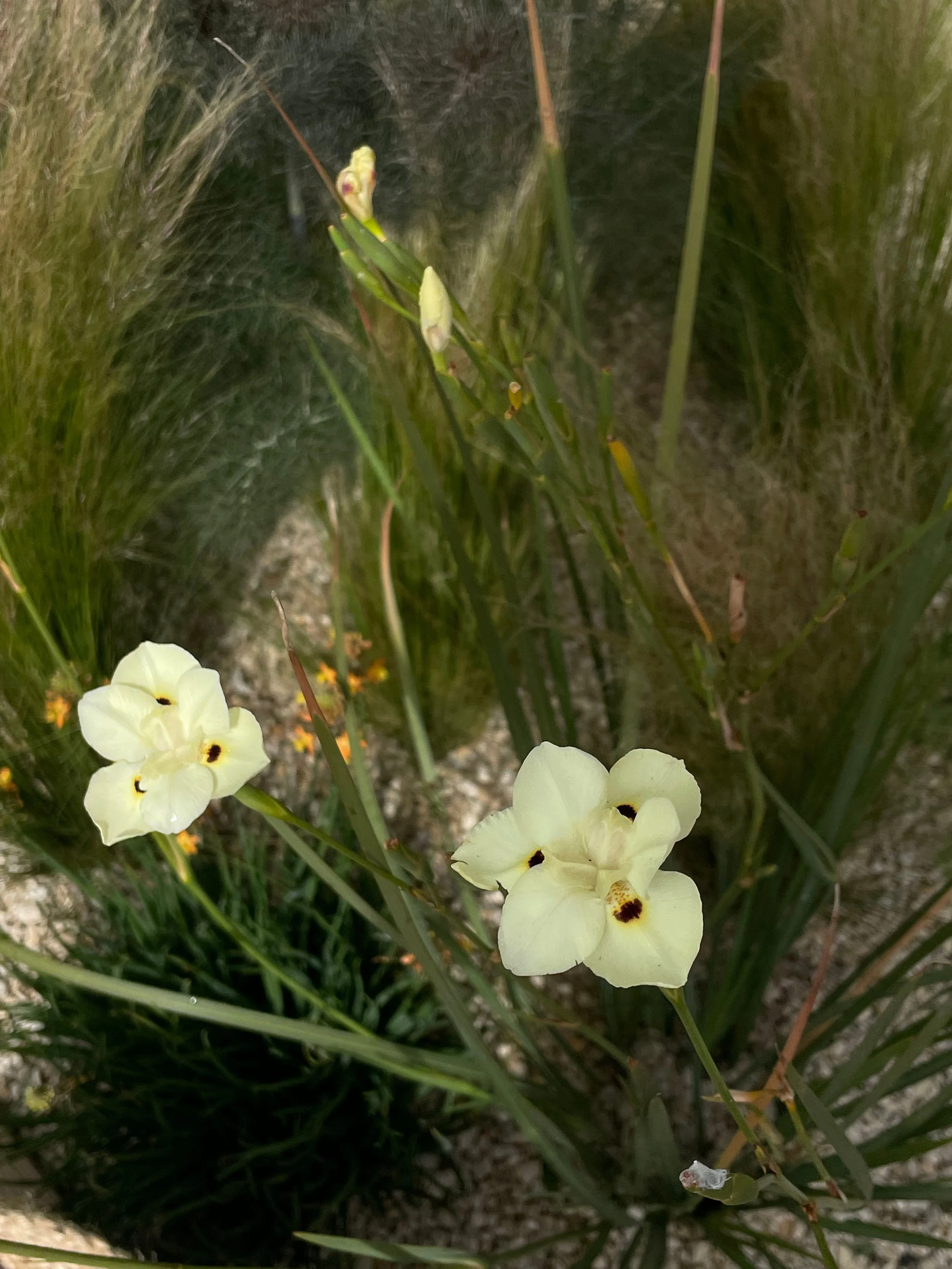
Some of our standout plants, such as the exquisite but ephemeral Iris ‘Kent Pride’ and the more obscure Dietes bicolor, native to South Africa, store water in their thick underground stems, known as rhizomes. This adaptation allows them to survive periods of extreme drought.
Another memorable South African plant in the scheme was the bright, jewel-like Bulbine frutescens. Found in sandy and rocky shrublands and hillsides, its fleshy, long succulent leaves store reserves of water during dry spells, allowing it to survive in hostile conditions. However, this will need winter protection if you were to add it to your own gravel garden palette, as it doesn’t tolerate winter wet or temperatures below -5°C.
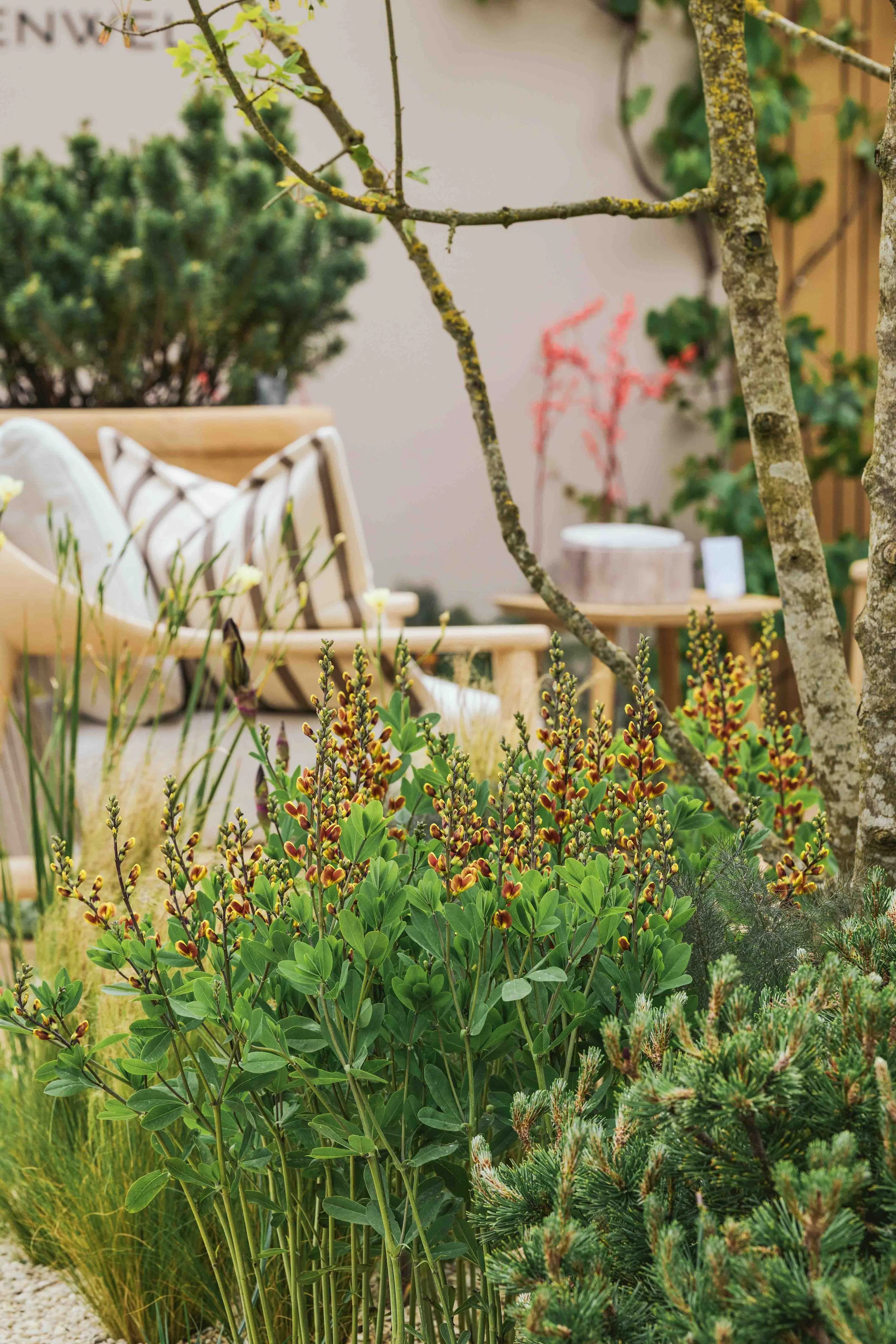
Deep taproots are also fundamental to a plant’s survival when water is scarce. The compact Baptisia ‘Cherry Jubilees’, arguably the most popular plant on our stand for its rich bi-coloured flowers, is an exceptional example of a plant that sends a powerful taproot deep into the soil, allowing it to access moisture from deeper down. It also enriches the soil through its nitrogen-fixing root system, making it a brilliant choice for a drought-tolerant planting scheme.
An appreciation of a plant’s natural habitat is also fundamental to creating planting communities that are long-lasting, diverse and resilient. Hesperaloe parviflora, chosen for its striking architectural flower spikes, is native to the deserts of northern Mexico and Texas. We planted it alongside Pinus mugo, which is native to the high-altitude regions of the Alps and Pyrenees and is similarly adapted to harsh, dry and arid conditions, making them natural companions within our scheme.
Tree selection for a changing climate has also been a major topic of conversation recently, with many trees entering a premature autumn due to the stress of prolonged heat. Our feature trees at Chelsea were both Acer monspessulanum, the Montpellier maple, a species that is incredibly drought-tolerant once established. Native to the Mediterranean, it has a deep root system that allows it to access moisture from deeper within the soil.
In conclusion, climate resilience isn’t simply about drought tolerance. It’s about designing for greater climatic extremes. The uncertainty of future weather patterns means that observing and understanding your site, soil conditions and planting palette has never been more important. At Kawauchi Rowe, we believe that choosing plants for function rather than fashion is key to designing for a changing climate.
It’s important to note that the plants mentioned all require free-draining soil to survive the forecasted wetter winters, too, as these conditions are specific to a gravel garden.